CBCT Scan explained
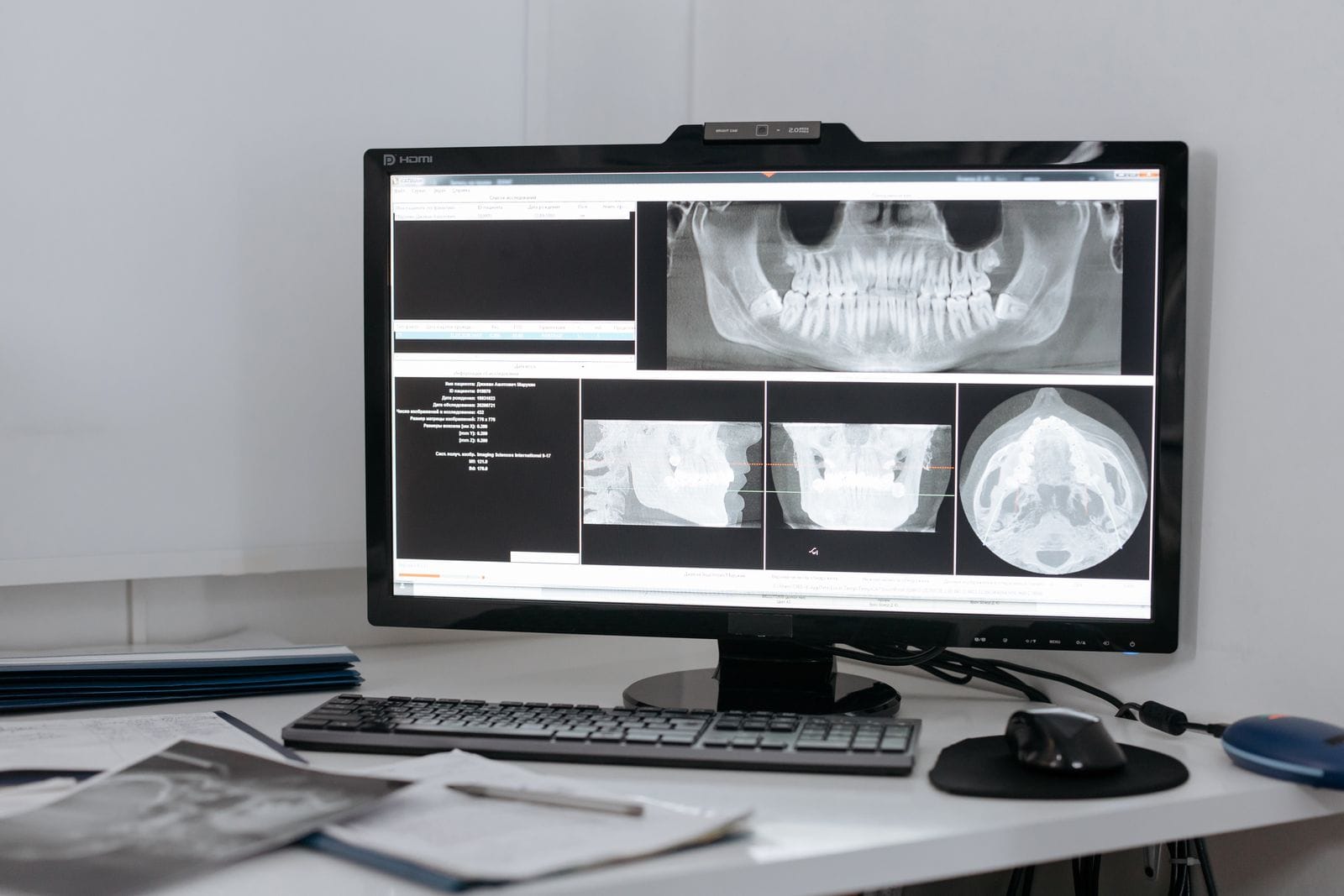
CBCT stands for cone beam computed tomography. It's a type of dental X-ray that creates a three-dimensional picture of your teeth, roots, jawbone and nearby structures.
Standard X-rays show a flat image. A CBCT scan lets your dentist look at an area from different angles, which can help when planning more complex treatment.
Benefits
- Shows teeth and bone in three dimensions
- Helps plan implant placement
- Can reveal details that flat X-rays may miss
- Quick to carry out
When it may help
- You're planning dental implants
- You have impacted wisdom teeth
- A complex root canal problem
- Your dentist needs a closer look at your jaw
What happens during treatment
- 1
Prepare
You remove any metal items such as jewellery, glasses or removable dentures.
- 2
Position
You stand or sit still while your head is gently positioned.
- 3
Scan
The machine rotates around your head, usually in under a minute.
- 4
Review
Your dentist studies the images and explains what they show.
Will it hurt?
A CBCT scan is painless and nothing goes in your mouth for most scans. All you need to do is keep still for a short time.
After your treatment
- There's no recovery time, so you can carry on with your day
- Your dentist will explain the results and next steps
- Keep a record of your scan if you may need it for future treatment
This page is general information and isn't a diagnosis. Your dentist will advise you on what's right for your teeth.