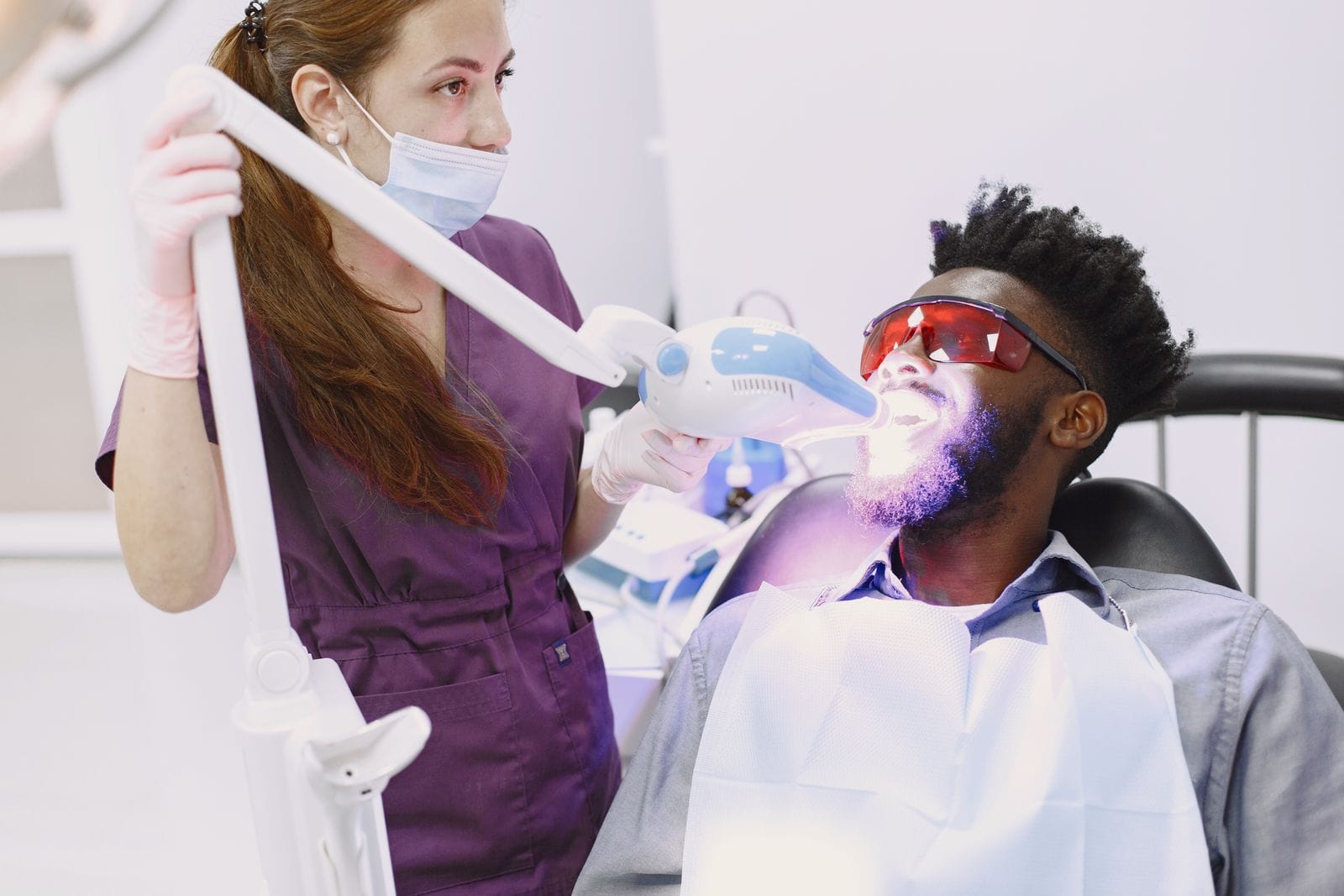
Laser Dentistry explained
A dental laser delivers a concentrated beam of light that can treat soft tissue with precision. Dentists may use it for procedures on the gums, such as reshaping them or removing small areas of tissue.
It's a tool that helps with certain treatments rather than a replacement for all dental instruments. Your dentist will tell you if it's suitable for your case.
Benefits
- Precise work on soft tissue
- Can reduce bleeding in some procedures
- May reduce the need for stitches in some cases
- Can make some gum procedures gentler
When it may help
- Uneven gum line, or too much gum showing
- Small areas of gum tissue that need removal
- Mouth ulcers that are slow to settle
- Your dentist suggests it for a specific procedure
What happens during treatment
- 1
Assess
We examine the area and confirm whether a laser is right for it.
- 2
Prepare
You'll wear protective glasses, and the area is numbed if needed.
- 3
Treat
The laser is used on the tissue, usually in a short session.
- 4
Review
We explain how to care for the area and check how it's healing.
Will it hurt?
Many laser procedures involve little discomfort, though it varies by treatment. Your dentist will numb the area if needed, and the tissue may feel tender as it heals.
After your treatment
- Follow your dentist's advice on food and brushing around the area
- Avoid very hot or spicy food while it heals
- Contact us if you notice swelling or pain that gets worse
This page is general information and isn't a diagnosis. Your dentist will advise you on what's right for your teeth.